
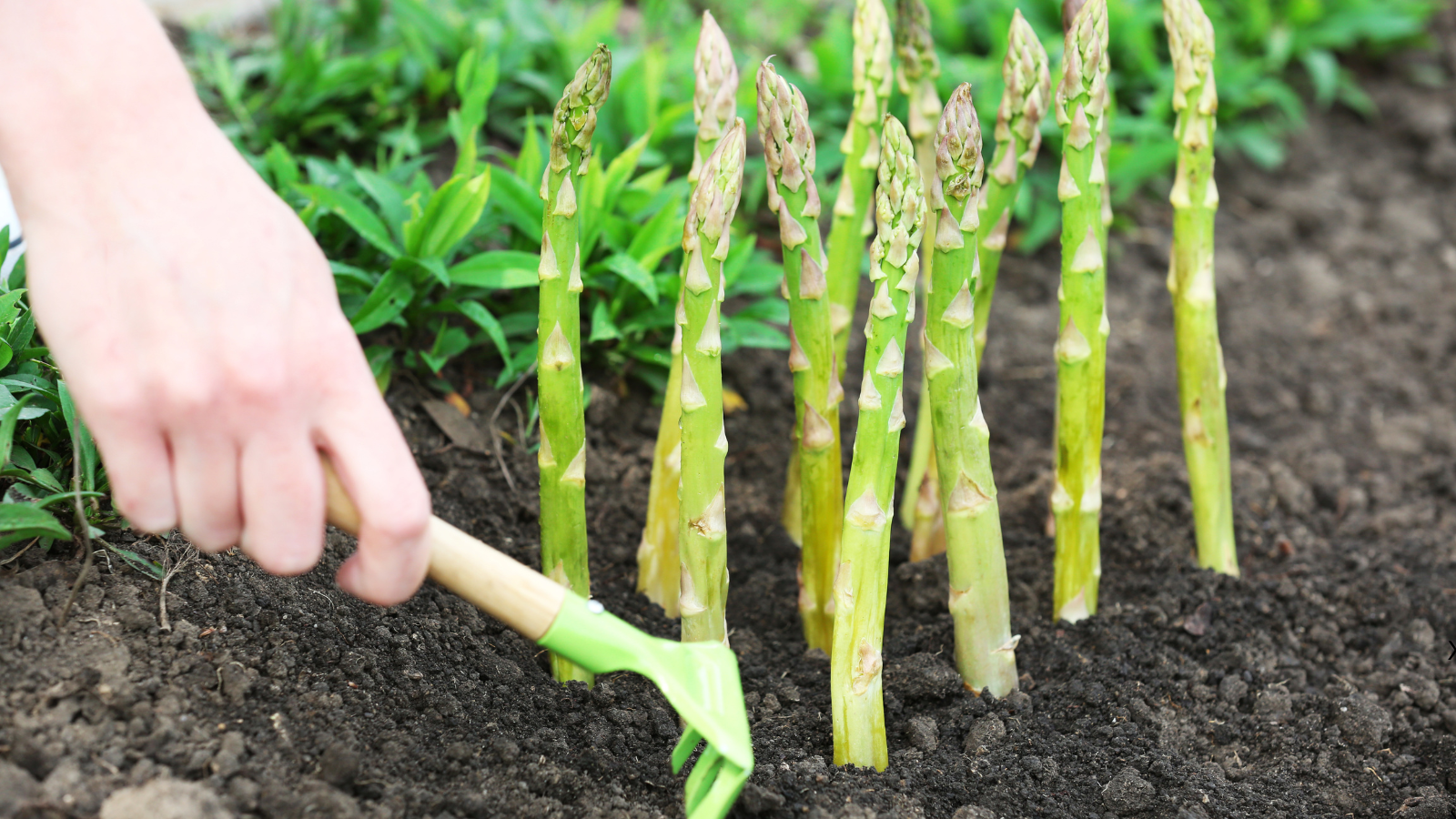
Asparagus — the elegant green stalk that captivates our plates and palates. Bursting with flavour and a vibrant crunch, asparagus adds a touch of sophistication to any meal. It does require patience to establish, but once it's growing, an asparagus bed can reward you with harvests for 15 years or more.
Health Benefits of Asparagus
- Rich in nutrients: Low in calories and packed with vitamins A, C, E, K, and B vitamins, plus iron, copper, and calcium
- High in antioxidants: Flavonoids and polyphenols help combat oxidative stress and inflammation
- Supports heart health: High fibre and potassium help maintain healthy blood pressure and cholesterol
- Aids digestion: Soluble fibre promotes healthy digestion and helps manage blood sugar
- Promotes healthy pregnancy: An excellent source of folate, essential for fetal development
How to Grow Asparagus
Location: Choose a spot with full sun — at least 6–8 hours of sunlight daily. Select a well-drained site amended with organic matter. This is a permanent planting, so choose your location carefully.
Soil preparation: Asparagus prefers slightly alkaline soil with a pH of 7.0 to 7.5. Improve fertility with compost or well-rotted manure.
Planting crowns: Asparagus is typically grown from crowns (1-year-old plants). Dig trenches 30–45cm (12–18 inches) apart and 15–20cm (6–8 inches) deep. Place crowns with buds facing up, cover with soil, and space varieties at least 45cm (18 inches) apart.
Watering: Keep soil consistently moist but not waterlogged, especially during the first couple of years of establishment.
Mulching: Mulch around plants to suppress weeds and retain moisture. Fertilise with a balanced fertiliser in early spring.
⏳ Patience pays off: Asparagus will typically be ready for harvest in 2–3 years. Avoid harvesting in the first year to allow the plants to establish strong roots. In year two, harvest lightly. By year three, you can harvest fully — and then enjoy the bed for up to 15 years.
Harvesting Asparagus
Cut spears when they are 15–20cm (6–8 inches) tall before they start to fern out. Use a sharp knife, cutting just below the soil surface. Stop harvesting once the majority of spears become thin, which signals the plant needs to build up reserves for next year.
Ground vs Containers
✓ In the Ground
- More space for deep root development
- Beds can last 15+ years
- Higher yields of larger spears
✗ In the Ground
- Requires more initial soil preparation
- More susceptible to soil-borne pests
✓ In Containers
- Controlled soil quality and drainage
- Moveable for optimal sunlight
✗ In Containers
- Restricted space produces smaller, fewer spears
- Needs more frequent watering
Pests and Diseases
- Asparagus beetles: Hand-pick or apply insecticidal soap
- Cutworms: Use collars around new plants to deter them
- Rust: Promote air circulation, avoid overhead watering
- Fusarium crown rot: Avoid overwatering, plant in well-drained soil
Two Delicious Asparagus Recipes
🍋 Lemon Garlic Roasted Asparagus
Ingredients: 450g asparagus (trimmed), 2 tbsp olive oil, 3 garlic cloves (minced), zest and juice of 1 lemon, salt, pepper, grated Parmesan (optional).
Method: Preheat oven to 200°C (400°F). Toss asparagus with olive oil, garlic, lemon zest, salt and pepper. Roast for 15–20 minutes until tender and slightly crispy. Drizzle with lemon juice before serving.
🥢 Asparagus and Mushroom Stir-Fry
Ingredients: 450g asparagus (cut into 5cm pieces), 225g mushrooms (sliced), 2 tbsp soy sauce, 1 tbsp sesame oil, 2 garlic cloves, 1 tbsp fresh ginger, sesame seeds to garnish.
Method: Heat sesame oil in a wok. Sauté garlic and ginger 30 seconds. Add asparagus and mushrooms, stir-fry 5–7 minutes until tender. Add soy sauce, cook 1–2 more minutes. Garnish with sesame seeds and serve hot.
Ready to Start Growing?
Download the free Wise Gardener's Starter Guide — five easy steps to your first harvest.