
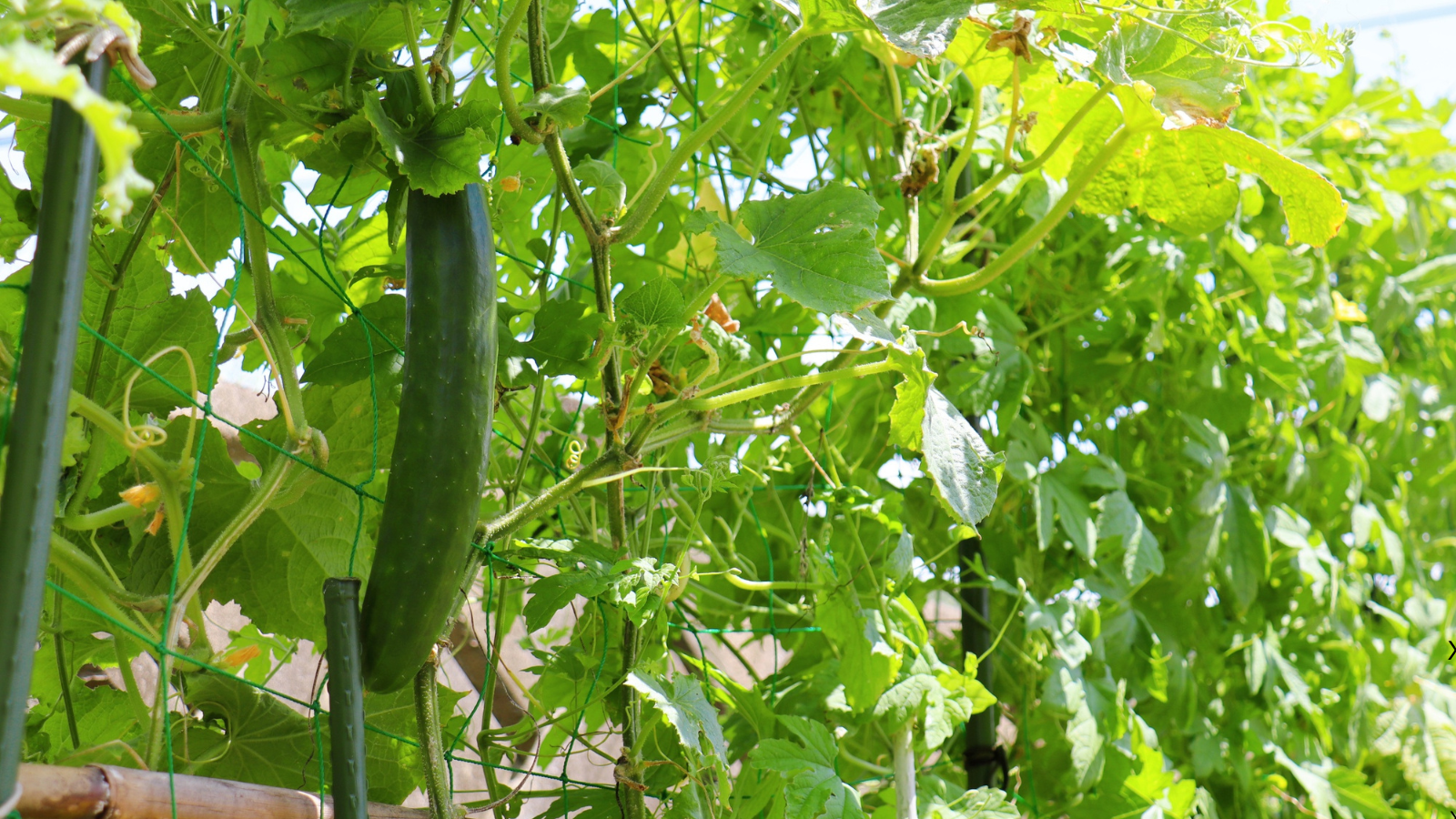
Cucumbers are a refreshing and versatile vegetable that add a wonderful crunchy texture to a variety of dishes. They are relatively easy to grow, making them a firm favourite among home gardeners. With the right conditions, a single plant can produce an abundance of cucumbers all summer long.
Health Benefits of Cucumbers
- Hydration: With a water content of about 95%, cucumbers are an ideal snack during hot weather
- Low in calories: A great option for healthy snacking
- Vitamins and minerals: Contain vitamin K, small amounts of vitamins C and B, plus potassium and magnesium
- Antioxidants: Flavonoids and tannins help combat free radicals in the body
- Digestive health: Fibre content, especially in the skin, aids digestion
Soil for Growing Cucumbers
pH: Slightly acidic to neutral — 6.0 to 7.0.
Texture: Well-draining, loamy soil is ideal. Heavy clay soils should be amended with organic matter to prevent root rot.
Nutrients: Enrich with compost or well-rotted manure before planting. A balanced fertiliser during the growing season also helps.
Pests and Diseases
- Cucumber beetles: Feed on leaves and can transmit disease — use insecticidal soap or neem oil
- Aphids: Cause leaf curling and stunted growth — use insecticidal soap or introduce ladybirds
- Spider mites: Thrive in dry conditions — increase humidity and apply insecticidal soap
- Powdery mildew: Ensure good air circulation; apply fungicide if necessary
- Bacterial wilt: Remove infected plants and practice crop rotation
Ground vs Containers
✓ In the Ground
- More room for sprawling vines — larger yields
- Deeper root systems — stronger plants
- Greater nutrient diversity in natural soil
✗ In the Ground
- More weed competition
- Greater exposure to soil-borne pests
✓ In Containers
- Perfect for small spaces and urban gardens
- Moveable for sunlight and weather protection
- Easier soil quality management
✗ In Containers
- Restricted root space limits growth and yield
- Dries out faster — needs more frequent watering
Cucumber Varieties
- Slicing cucumbers: Larger, smooth-skinned, perfect for salads — try 'Marketmore' or 'Straight Eight'
- Pickling cucumbers: Smaller and bumpy — ideal for pickles. Try 'Boston Pickling' or 'Kirby'
- Seedless/English cucumbers: Crisp, few seeds, pleasant crunch — 'English' or 'Persian' varieties
💡 Harvesting tip: Pick cucumbers regularly — every 2–3 days during peak season. Leaving them too long causes them to turn yellow, become bitter, and signals the plant to stop producing.
Two Refreshing Cucumber Recipes
🥗 Cucumber and Mint Salad
Ingredients: 2 large cucumbers (thinly sliced), ¼ cup red onion (thinly sliced), ¼ cup fresh mint (chopped), 2 tbsp olive oil, 1 tbsp lemon juice, salt and pepper.
Method: Combine cucumbers, onion and mint. Drizzle with olive oil and lemon juice, season to taste, toss gently and serve chilled.
🥪 Cucumber Sandwiches
Ingredients: 1 large cucumber (thinly sliced), 225g cream cheese (softened), 1 tsp dill, 1 tbsp lemon juice, 8 slices wholegrain bread, salt and pepper.
Method: Mix cream cheese with dill, lemon juice and seasoning. Spread over bread slices. Layer cucumber on half the slices, top with remaining bread, cut into quarters and serve.
Ready to Start Growing?
Download the free Wise Gardener's Starter Guide — five easy steps to your first harvest.