
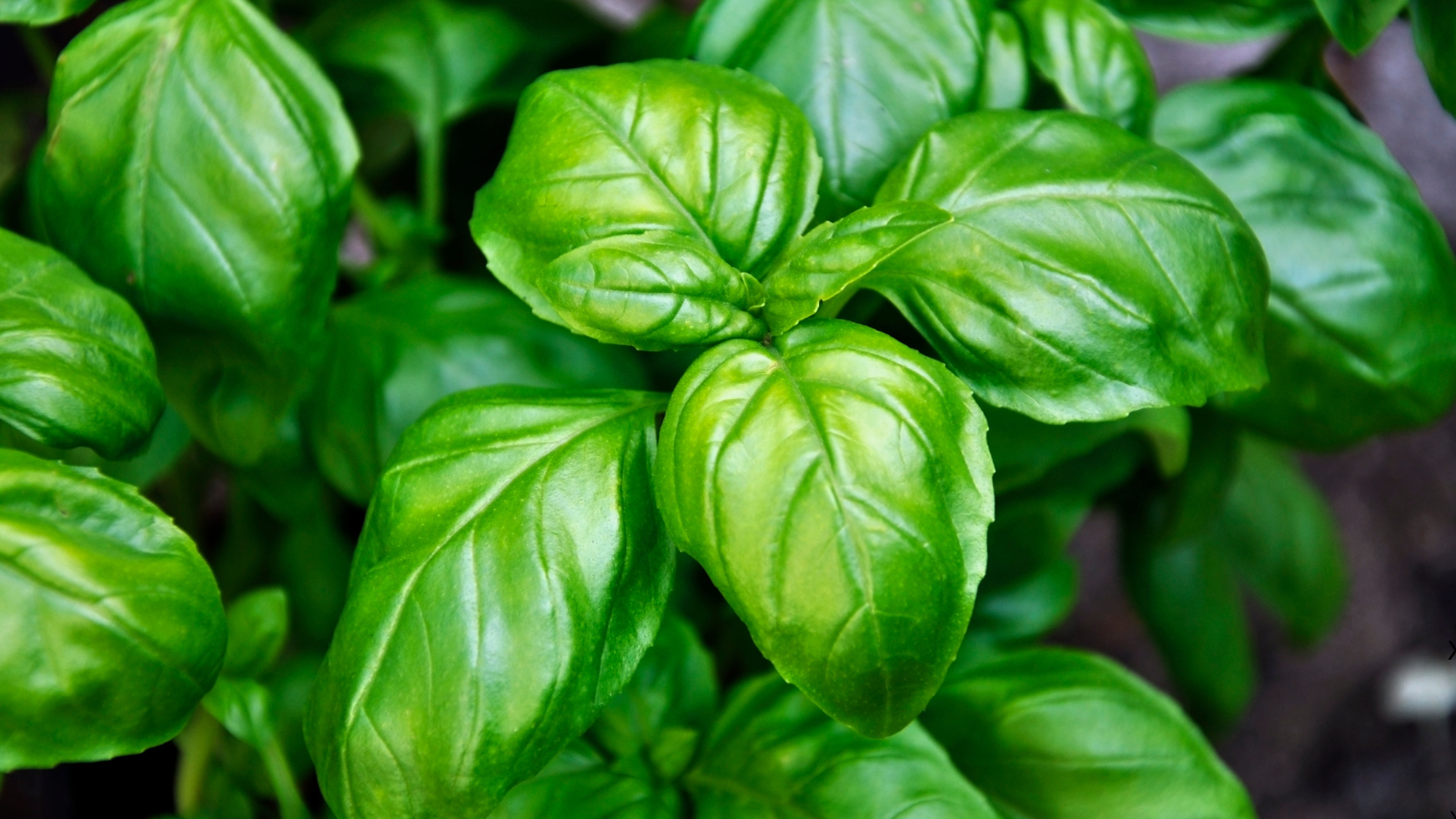
One of the most popular herbs in the world is Ocimum basilicum — commonly called sweet basil. Often called the "king of herbs," basil can be grown indoors or outdoors, in containers or in the ground, and rewards you with a steady supply of fragrant leaves all season long.
Sweet basil has oval-pointed, dark green leaves with a distinctive clove-pepper aroma and taste. A well-pruned plant will supply you with around half a cup's worth of fresh basil every week — even from a pot on a sunny windowsill.
Growing Conditions for Basil
- Sunlight: Basil needs at least 5 hours of direct sunlight per day. On a windowsill, turn the pot regularly so every side gets light. Don't let leaves touch cold glass.
- Soil: Well-draining, nutrient-rich, slightly acidic soil. Basil does not like wet feet — never waterlog the roots.
- Temperature: Basil is very sensitive to cold. It will not tolerate frost. May is typically the best time to start growing basil outdoors.
- Watering: Water when the soil is dry to the touch, watering at the base of the plant rather than over the leaves.
Sowing Basil from Seed
Basil is easy to sow from seed and relatively quick to germinate. When planting from seed, sow about six weeks before the last frost date. Even if you're limited on space, simply find a sunny windowsill, fill a container with well-drained soil, and you're ready to grow basil for months.
Key Growing Tips
✂️ Pinch, don't let it flower: As soon as flower stalks begin to form, pinch them out. This is the single most important thing you can do to extend your basil harvest — once basil flowers and sets seed, leaf production stops and flavour declines. Pinching creates compact, bushy plants instead.
- Basil grows 30–60cm (12–24 inches) tall depending on variety
- If growing under fluorescent lights in winter, hang lights 15cm (6 inches) from plants and leave on for 14 hours a day
- Basil increases in flavour when heated — use it generously in cooked dishes
Bringing Basil Indoors for Winter
Before the first frost, dig up the most robust outdoor plants and pot them in fresh compost. Check for insects and treat with a soap and water spray if needed. Gradually move them out of direct sunlight for about a week to help them acclimatise to lower indoor light levels, then bring them inside.
Popular Basil Varieties
- 'Dark Opal' (O. basilicum 'Dark Opal'): The only herb to win the All American Award of Excellence. Purple-leafed, decorative, and an excellent houseplant. Used exactly the same way as sweet basil.
- Lemon Basil (O. basilicum 'Citriodorum'): Strong lemon scent — wonderful in tea and particularly good with chicken and fish dishes.
Companion Planting with Basil
In the garden, plant basil alongside tomatoes — it is well documented that basil helps to deter both insects and disease from tomato plants. Basil also repels flies and mosquitoes, making it a useful plant to grow near seating areas.
Using Basil in the Kitchen
Fresh basil is extraordinary. Use it in tomato dishes (raw and cooked), pesto, pasta sauces, salad dressings, soups, fish dishes, mushroom dishes, egg and rice dishes. Add fresh leaves to salads and infuse into vinegars and olive oils. Basil can also be frozen or dried for year-round use.
Watch: Planting Basil
Enjoying Your Herb Growing Journey?
Download the free Wise Gardener's Starter Guide — five easy steps to your first harvest.