
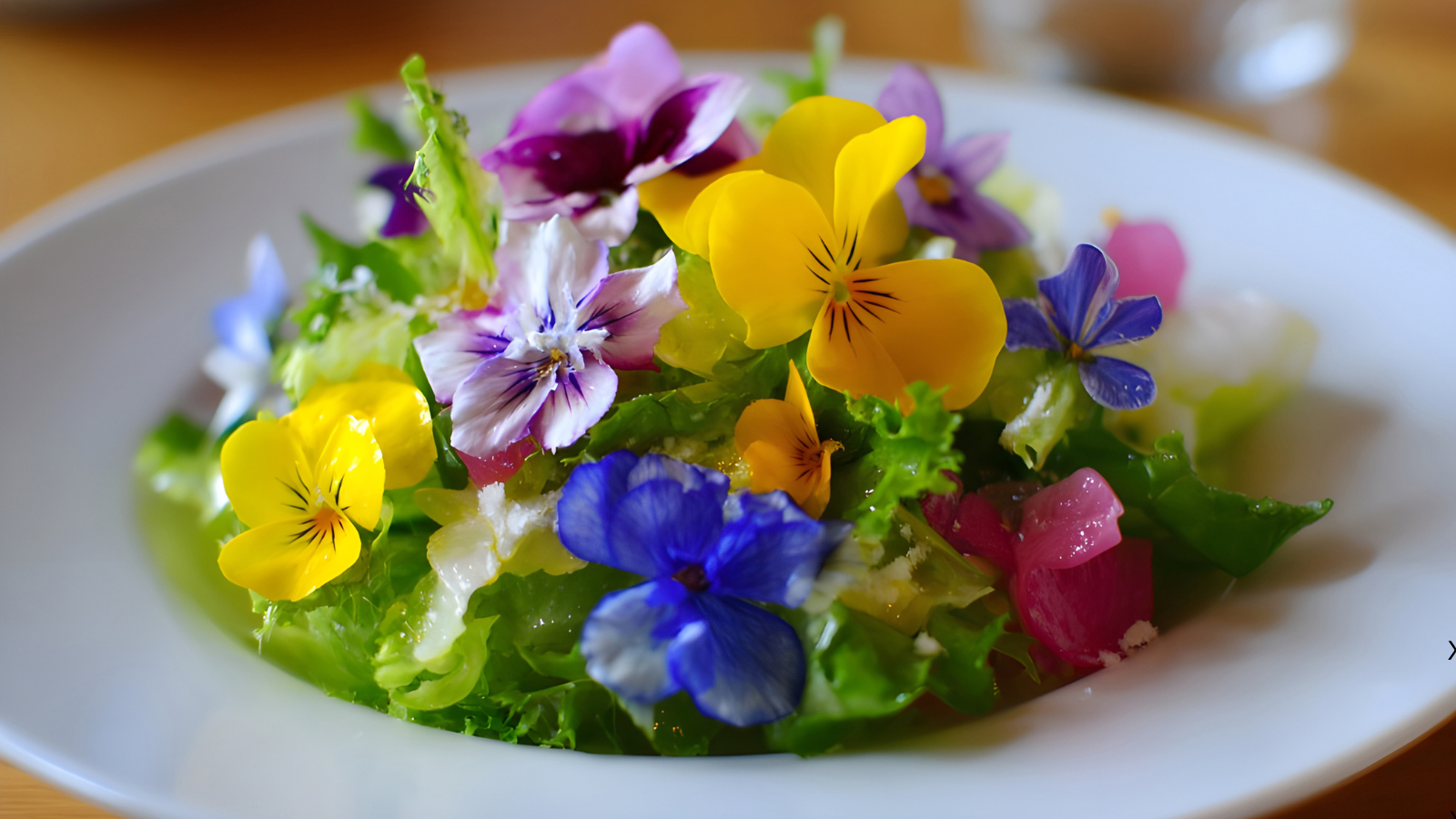
One of the most natural and most appealing ways to brighten up and beautify a dish is the simple addition of an edible flower! There are many varieties which are edible, and add a subtle flavour into your dish. Cooking with flowers, though, is a cautious process — you must be completely sure that what you are serving is neither poisonous nor chemically treated.
Which Flowers Are Safe to Eat?
The absolutely most important factor when deciding to cook with flowers is to be sure that the variety is edible, and not poisonous. The safest bet for edible flowers is those that will eventually grow into the vegetables and fruits we already know and love — the flowers of vegetables, fruits, and herbs often offer a reminder of the plant they come from, in a more subtle flavour.
Good examples of edible flowers from plants we know include:
- Basil flowers
- Chive flowers
- Garlic flowers
- Lemon flowers
- Chamomile flowers
- Arugula flowers
- Mustard flowers
- Squash flowers (which can even be fried and eaten on their own)
- Sunflowers
⚠️ Important safety note: Never use an ingredient in your cooking that you are not sure is safe. Many flowers are poisonous, so always confirm the identity and safety of any flower before using it in food.
Beautiful Flowers You Can Also Eat
Edible flowers are not limited to those which later blossom into fruits and vegetables. Some of the prettiest flowers have petals which we can eat. Specifically, carnations, dandelions, jasmine, rose, lavender, violets, and daisies are edible. Some of these add a beautiful aroma to the dish and a very romantic touch. They are perfect additions to salads, adding sharp colour and a delicate flavour.
Where to Get Flowers for Cooking
Do not buy flowers for cooking from florists unless specifically grown for eating purposes. Most flowers from florists are treated with products that should not be consumed. Either find a specialist who grows flowers for culinary purposes, or — better still — grow your own!
Growing your own flowers for food involves basically the same rules as growing flowers for aesthetic pleasure, but be sure to avoid pesticides and use natural methods of keeping pests away.
Natural Pest Control for Your Edible Flower Garden
- Plant a variety of flowers near each other — this balance can help ward off pests naturally
- Ladybirds are beneficial insects that eat many garden pests — welcome them
- Smearing some garlic and coffee grounds into the soil often keeps pests at bay
How to Use Flowers in Cooking
Use only the petals of flowers, as the pollen may cause allergies and is often bitter. For first-time flower cooks, use small amounts to introduce new flavours gradually.
Ideas for using edible flowers:
- Add petals to salads for colour and delicate flavour
- Mix into herbal butters for a beautiful presentation
- Add to cake batters and crepe mixtures
- Use as garnishes for both savoury and sweet dishes
- Freeze into ice cubes for stunning drinks
Ready to Start Growing?
Download the free Wise Gardener's Starter Guide — five easy steps to your first harvest.